Fascias and Soffits in Faygate
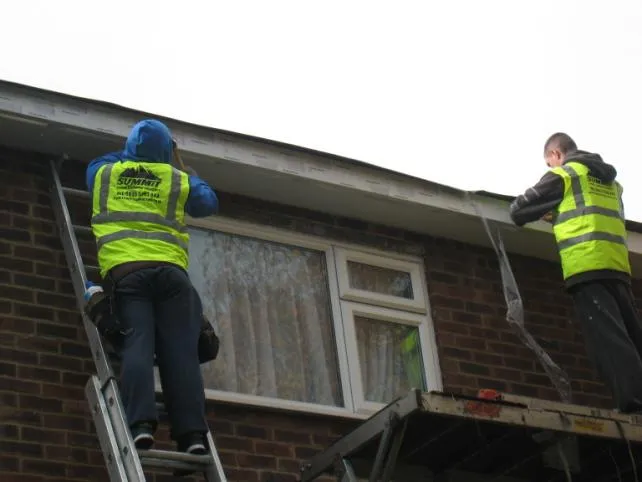
Signs of rot, poor ventilation and hidden roof damage
Most homeowners only look at their roofline when something starts dripping. The trouble is, fascias and soffits often give you the earliest warning that water is getting where it should not. A small failure at the roof edge can lead to rotten timber, stained ceilings, mould in the loft, and gutters that never seem to cope in heavy rain.
If you are searching for fascias and soffits in Faygate, this guide will help you spot the signs that repairs are needed, understand what causes the problems, and know when a simple fix is enough and when replacement makes better sense.
What fascias and soffits actually do
Your roofline has a job to do beyond looking tidy.
Fascia boards sit along the edge of the roof and support the guttering. They protect the ends of rafters and help keep water out of the roof structure.
Soffits sit underneath the fascia, closing the gap between the wall and the roof edge. Many soffits include ventilation that helps the loft breathe.
When these components fail, rainwater can creep into timber and insulation. Poor ventilation can also cause condensation, which leads to mould and damp smells.
The early signs of fascia and soffit problems
Timber fascias often show the first signs as bubbling paint, dark staining, or a swollen edge. That usually means water has been getting in for a while.
Soft timber or crumbling edges
If you can safely reach a low area and the timber feels soft, spongy, or flakes away, it is a strong sign of rot.
Sagging guttering or gutters pulling away
Gutters should sit level and fixed tight. If they sag, overflow, or pull away from the fascia, it can point to failing fixings, rotten fascia timber, or both.
Overflow marks on brickwork
Staining down the wall beneath gutters is not just cosmetic. It can mean water is running behind the gutter into the fascia and soffit area.
Soffits that bow or split
Soffits can warp when they take on moisture or when ventilation is poor. You might see gaps at the joints, splits, or sections that are dropping away.
Birds and insects getting in
Gaps in the soffits or around the eaves can become entry points. Once birds are nesting or insects are getting into the roof edge, the problem tends to spread.
Damp smells or mould in the loft
Poor roof ventilation is a common hidden issue. If the loft smells musty or you see mould on timbers, the soffit ventilation may be blocked, missing, or inadequate.
What causes rot and roofline damage
Roofline issues rarely happen overnight. The usual causes are practical and fixable.
Blocked or leaking gutters
When gutters are blocked, water overflows back towards the roof edge. Over time it can saturate fascia boards and the ends of rafters. Leaking gutter joints can do the same, even when the gutter is not visibly overflowing.
Poor fall or misaligned gutter runs
If guttering does not run to the outlet properly, water pools and spills where it should not. That constant overflow can slowly rot timber and stain brickwork.
Failed roof felt at the eaves
At the roof edge, the underlay or felt should guide water into the gutter. If it is torn, sagging, or missing at the eaves, water can track behind the fascia.
Poor ventilation
A loft needs airflow to remove moist air. Without it, condensation builds up, especially in colder months, and that can lead to mould and damp timbers.
Ageing timber and poor past repairs
Timber fascias that have been patched, filled, or painted over repeatedly may look fine from a distance, but can be soft underneath. A cosmetic repair rarely stops water ingress for long if the root cause is still there.
Why poor ventilation can cause hidden roof damage
Many people associate ventilation with comfort, but it is really about moisture control.
Everyday living creates moisture, from cooking, bathing, and even drying clothes indoors. That warm, moist air rises and can enter the loft through small gaps. If it cannot escape, it condenses on cold surfaces like felt and rafters.
Over time, condensation can lead to
mould on roof timbers
damp insulation that stops performing properly
a musty smell in upstairs rooms
rusting nails and fixings
staining that looks like a roof leak
If your soffits should be ventilated but the vents are blocked by paint, insulation, or debris, it is worth addressing quickly.
Repair or replace in Faygate
There is no one-size-fits-all answer. It depends on condition, material, and how far the problem has spread.
When repair is often enough
localised damage in a small section
gutter brackets are loose but the fascia is still sound
minor soffit issues caused by a blocked vent
the problem is caught early and timber rot is limited
When replacement is usually the better option
widespread rot across multiple runs
gutters repeatedly fail or pull away
soffits are cracked, bowing, or missing ventilation
you have ongoing damp or mould in the loft linked to ventilation
previous repairs have been done several times without solving the issue
If you are replacing, it is also the best time to check the eaves felt support and make sure the roof edge directs water properly into the gutter.
How to look after fascias and soffits
A few basic checks each year can prevent most problems from becoming expensive.
Clear gutters and check outlets, especially after autumn and storms
Look for staining on walls and overflow marks
Check for sagging gutters and loose brackets
Make sure loft insulation is not blocking soffit vents
Keep an eye on paint condition if you have timber boards
If something looks off, it is cheaper to investigate early than to wait until timber is soft or water gets inside.
Why Choose Summit Contractors?
With years of experience serving and the wider Horsham area, Summit Contractors is known for reliable, honest workmanship. We offer:
- Free, no-obligation quotations
- Clear pricing with no hidden fees
- Expert guidance tailored to your property
- Local knowledge of Faygate homes and weather patterns
- Fully insured services with satisfaction guaranteed
Our team takes pride in offering a friendly, respectful service. We tidy up after ourselves and complete every job with minimal disruption to your daily routine.